
1. What Is an RF Coaxial Connector?
An RF coaxial connector is designed to connect coaxial cables while maintaining continuous impedance throughout the signal path. It ensures that high-frequency signals are transmitted with minimal reflection and attenuation.
RF coaxial connectors typically consist of:
-
A center conductor for signal transmission
-
An outer conductor for grounding and shielding
-
A dielectric insulator to maintain spacing and impedance
Precision manufacturing and assembly are critical to ensure consistent electrical performance.
2. Common Types of RF Coaxial Connectors
There are many types of RF coaxial connectors, each designed for specific frequency ranges, power levels, and installation requirements. Common connector types include:
-
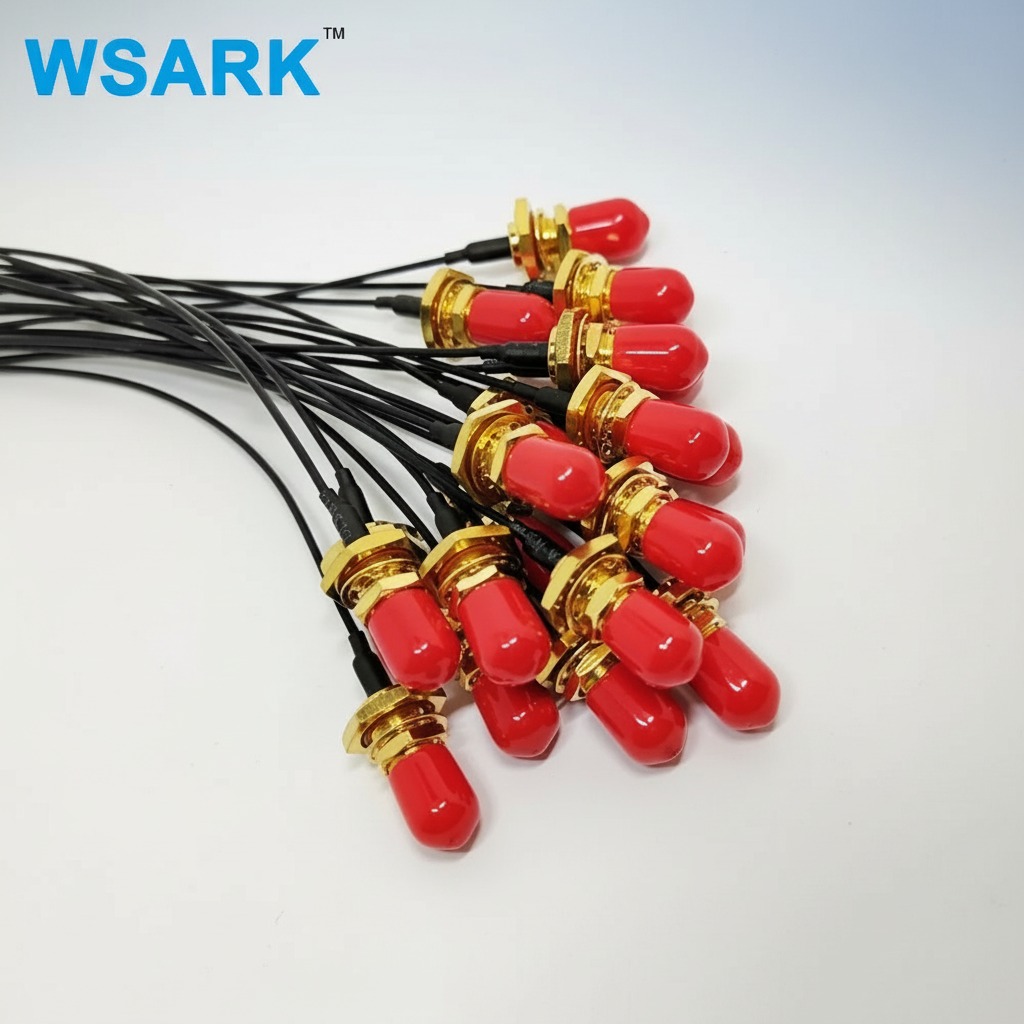
SMA Connectors – Compact size, commonly used in RF modules and testing equipment
-
N-Type Connectors – Suitable for higher power and outdoor applications
-
BNC Connectors – Quick-connect design, often used in test and measurement systems
-
TNC Connectors – Threaded version of BNC with improved performance
-
MCX / MMCX Connectors – Miniature connectors used in compact devices
Selecting the appropriate connector type depends on both electrical and mechanical requirements.
3. Key Factors When Choosing an RF Coaxial Connector
When selecting an RF coaxial connector, engineers should consider the following factors:
Operating Frequency
Each connector type has a maximum rated frequency. Using a connector beyond its rated range may cause increased insertion loss or signal reflection.
Impedance Matching
Most RF systems use 50Ω or 75Ω impedance. The connector impedance must match the system and cable impedance to avoid mismatch losses.
Environmental Conditions
For outdoor or harsh environments, weatherproof designs and corrosion-resistant materials are recommended to ensure long-term reliability.
Mechanical Durability
Factors such as vibration resistance, mating cycles, and installation method (threaded, snap-on, or crimp) affect connector longevity and performance.
4. Typical Applications of RF Coaxial Connectors
RF coaxial connectors are widely used in:
-
Wireless communication and base station equipment
-
Antenna systems and RF modules
-
Broadcasting and satellite communication
-
RF testing and measurement instruments
-
Industrial and IoT wireless systems
In these applications, stable connector performance is essential for maintaining consistent signal transmission.
5. Importance of Quality and Manufacturing Precision
High-quality RF coaxial connectors are manufactured with tight tolerances and strict quality control. Precision machining and proper material selection help ensure:
-
Low insertion loss
-
Stable impedance
-
Reliable mechanical connection
-
Long service life
Poor-quality connectors can lead to intermittent connections, signal degradation, and increased maintenance costs.
Conclusion
RF coaxial connectors play a vital role in maintaining signal integrity in wireless communication systems. By carefully considering frequency range, impedance, environment, and mechanical requirements, engineers can select the right connector for reliable and efficient system performance.
Zhenjiang Woshuang Wireless RF Technology Co., Ltd supplies a wide range of RF coaxial connectors with stable electrical performance and strict quality control, suitable for telecommunications, broadcasting, RF testing, and industrial wireless applications.