
Understanding the Wilkinson Power Divider
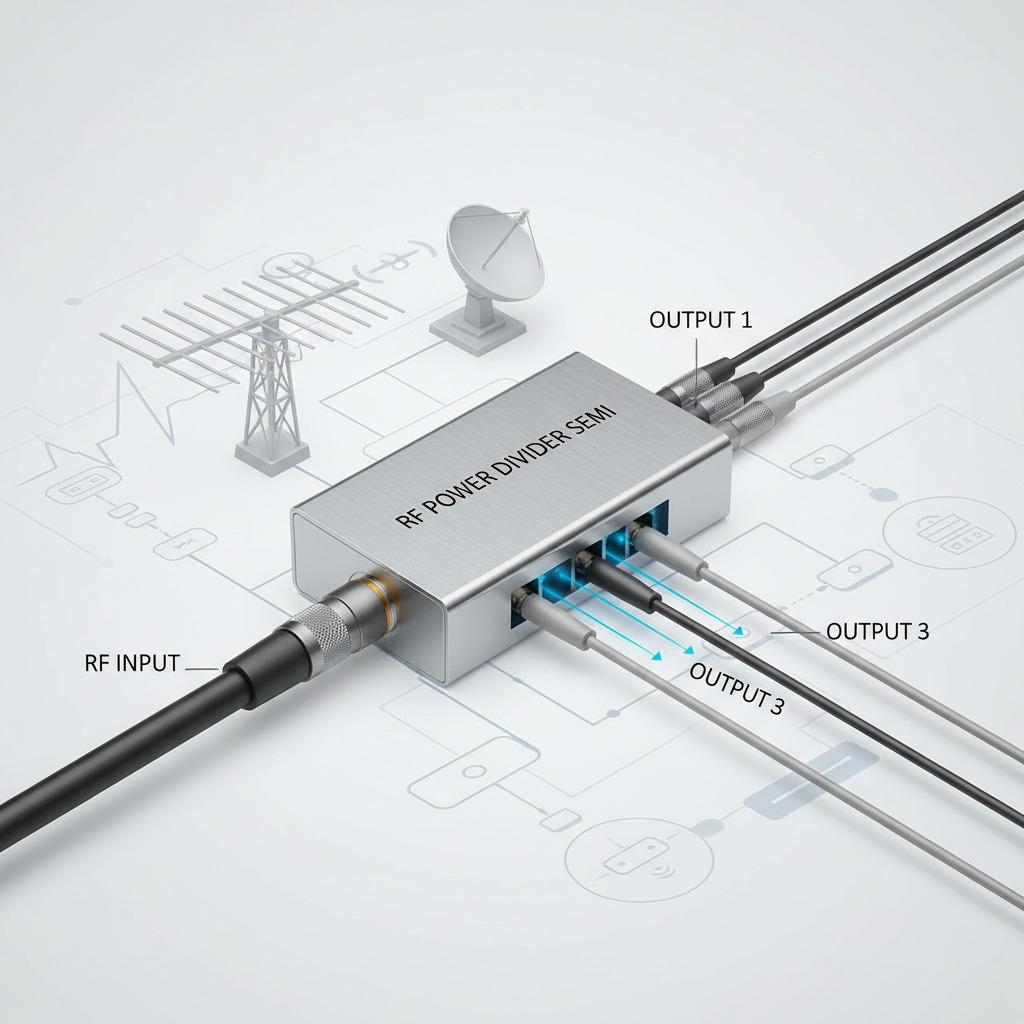
The Wilkinson power divider stands as a cornerstone in RF engineering, offering reliable power division for high-frequency applications. This device, essential for splitting RF signals while maintaining isolation between ports, has become indispensable in modern wireless systems. As we delve into the world of RF power division, it's clear that the Wilkinson power divider provides a balance of performance and simplicity that few other components can match. Whether you're designing antennas, amplifiers, or communication networks, understanding this technology is key to optimizing signal integrity.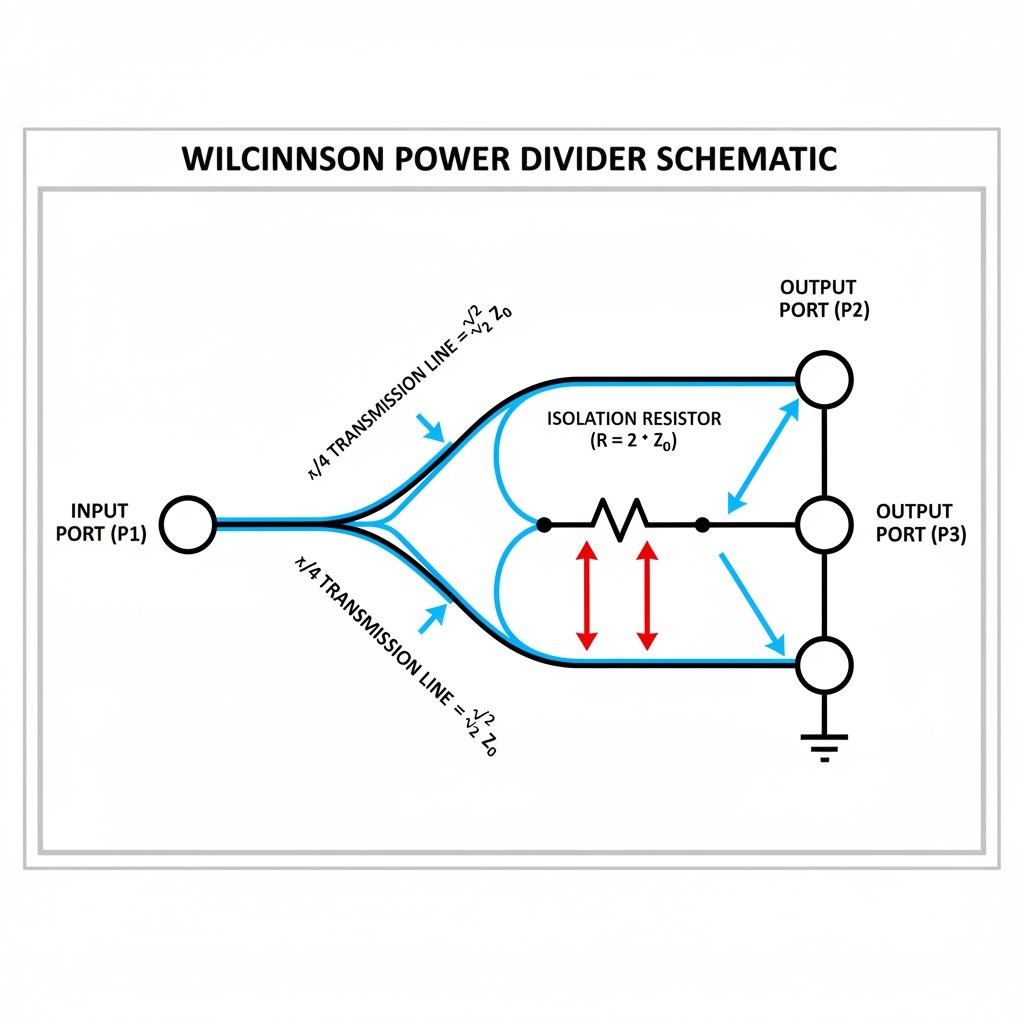
Key Principles of Power Dividers in RF Systems
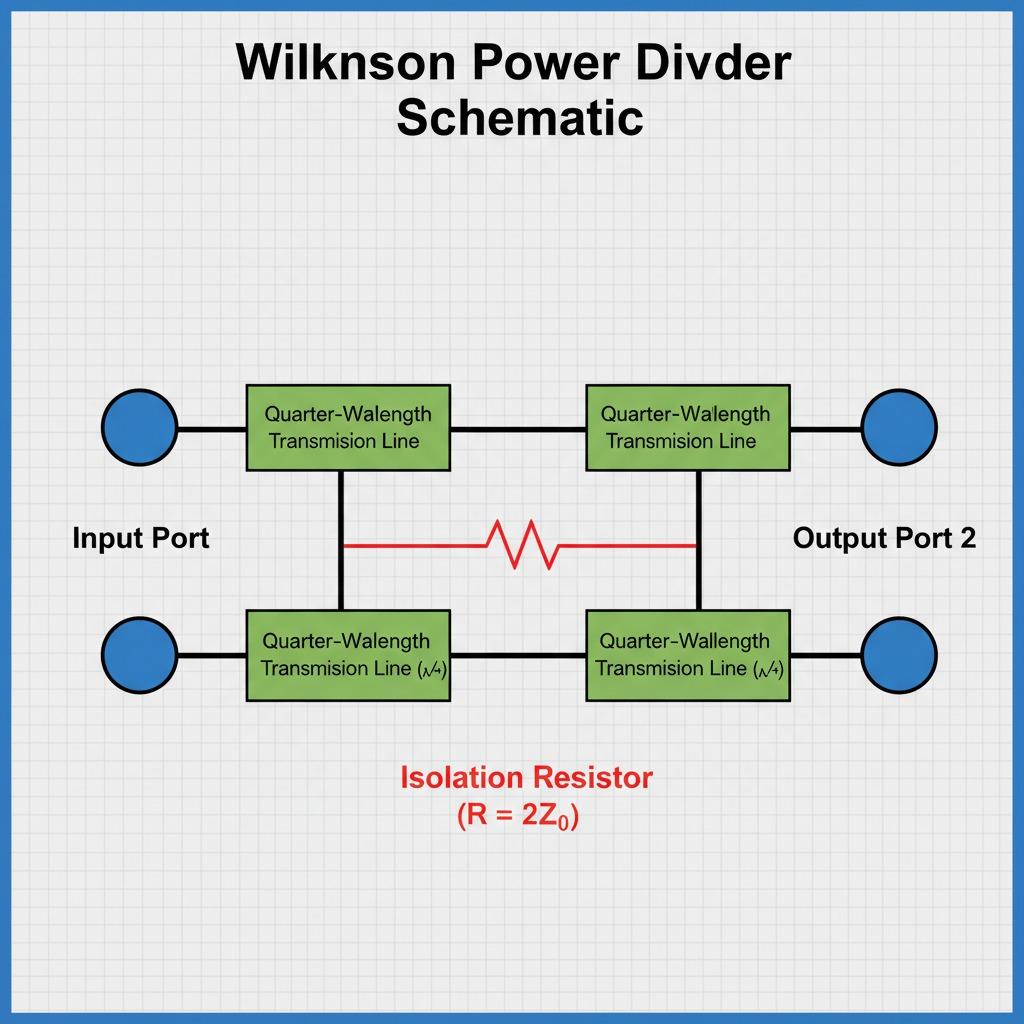
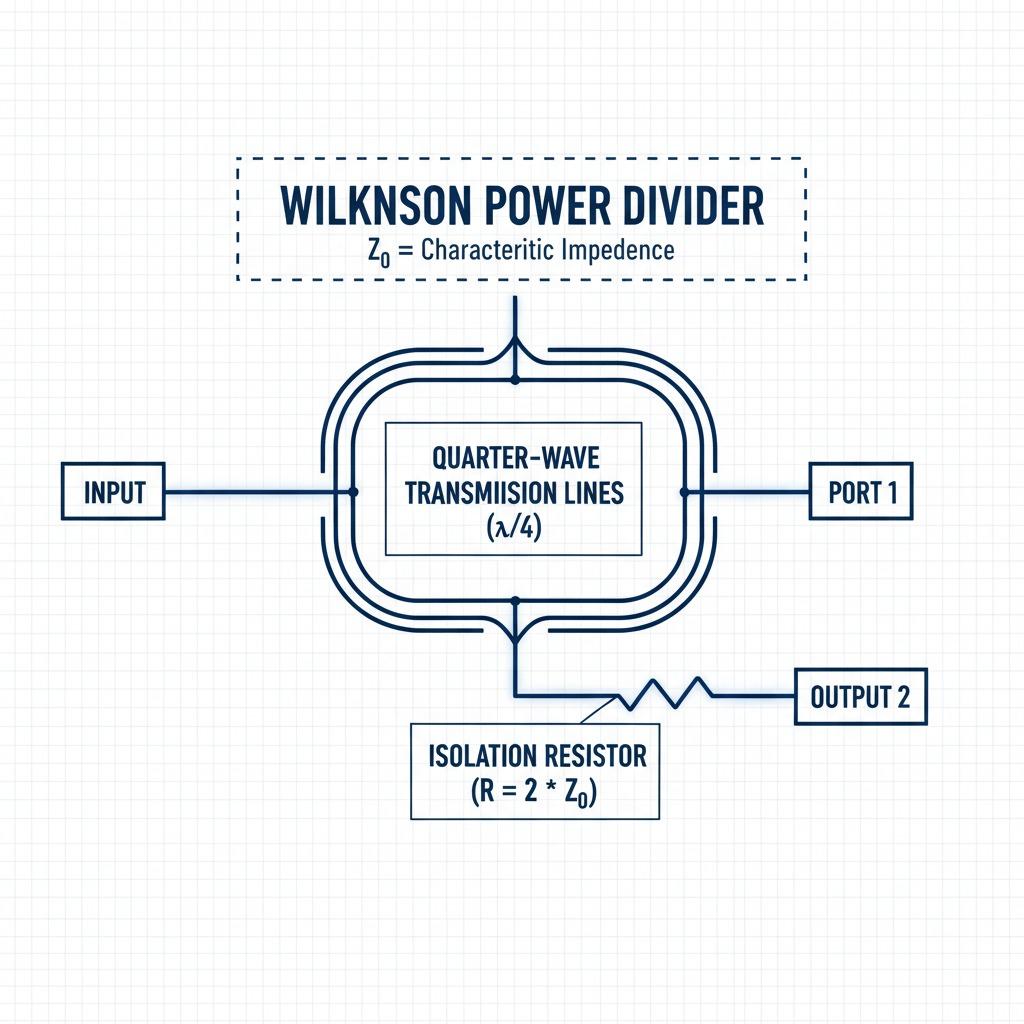
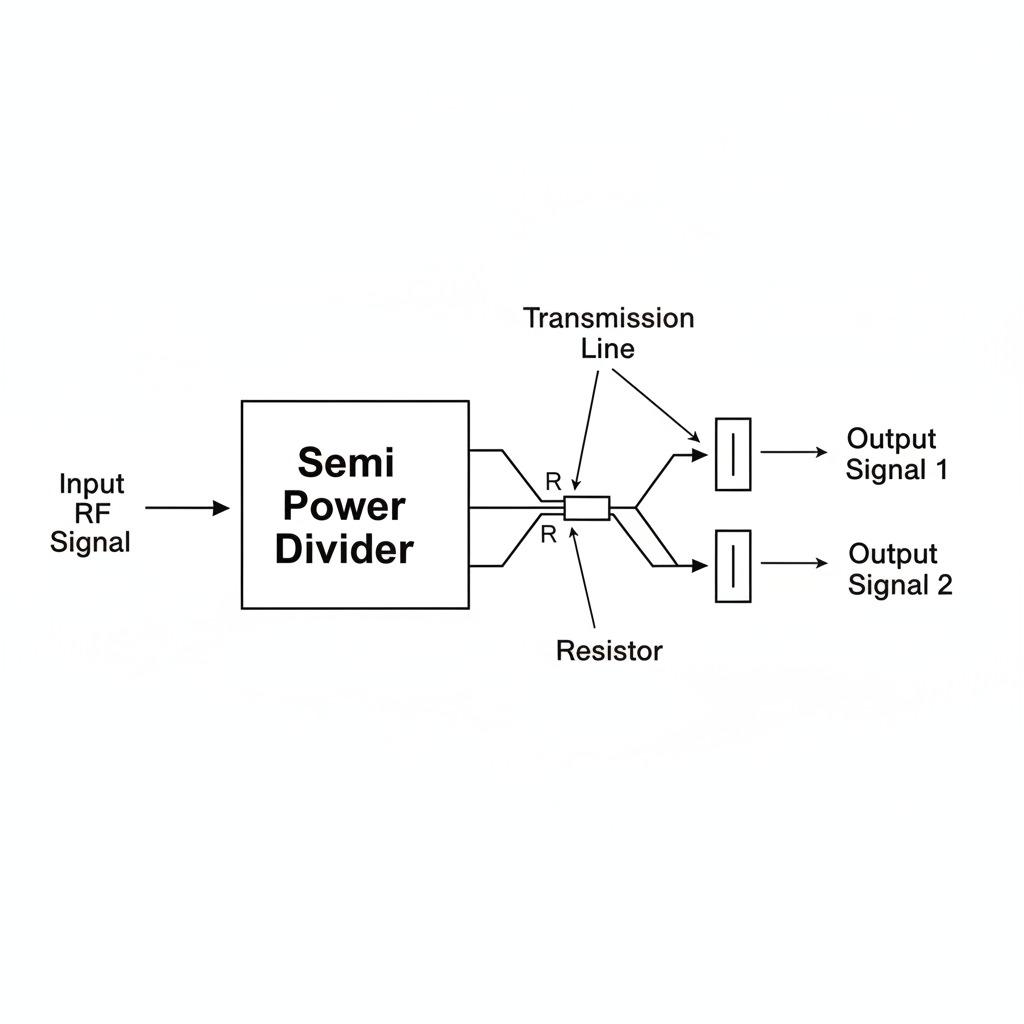
A power divider is fundamentally a passive device used to split an input signal into multiple output signals with minimal loss. In the context of RF power division, the Wilkinson power divider excels due to its unique configuration that incorporates a resistor to enhance port isolation. Invented by Ernest J. Wilkinson in the 1960s, this divider typically operates in a 3-port setup: one input and two outputs, though variations exist for more ports. The core design relies on quarter-wavelength transmission lines, which create the necessary phase shifts for even power splitting.
What sets the Wilkinson power divider apart is its ability to provide excellent isolation between the output ports, preventing signal leakage that could degrade system performance. This isolation is achieved through a resistor connected between the output ports, typically valued at twice the characteristic impedance of the system, often 100 ohms for a 50-ohm setup. For broadband applications, this feature ensures that reflected power is dissipated rather than reradiated, making it superior to simple resistive or reactive dividers.
In practical RF power division scenarios, the Wilkinson power divider is favored for its low insertion loss and high power-handling capability. Engineers often select it for frequencies ranging from HF to microwave bands, where maintaining signal purity is critical. The device's symmetry ensures equal power split, usually 3 dB per output, while the input port sees the full signal without distortion.
Design and Implementation of Wilkinson Power Dividers
Designing a Wilkinson power divider involves careful consideration of the operating frequency and impedance matching. The quarter-wave lines are tuned to the center frequency, with their lengths calculated as λ/4, where λ is the wavelength. For example, at 1 GHz in a 50-ohm microstrip line on FR4 substrate, the line length might be around 7.5 cm, adjusted for the effective dielectric constant.
Fabrication can be done using microstrip, stripline, or coaxial techniques, each offering trade-offs in bandwidth and cost. Microstrip implementations are popular for planar circuits due to ease of integration with MMICs and PCBs. The resistor is often a surface-mount chip or thin-film type, placed precisely between the output branches to maximize isolation, typically achieving 20 dB or better.
Bandwidth is a crucial aspect of RF power division with Wilkinson designs. The classic single-section divider offers about 20-30% fractional bandwidth before VSWR degrades significantly. For wider bands, multi-section configurations cascade multiple quarter-wave transformers, extending operation up to an octave or more. Advanced variants, like the rat-race coupler or hybrid designs, build on these principles but retain the isolation resistor's essence.
Simulation tools such as ADS or HFSS are invaluable for optimizing the Wilkinson power divider. They allow modeling of parasitics, like line discontinuities, and fine-tuning for real-world performance. In testing, parameters like return loss, coupling, and isolation are measured using a vector network analyzer, ensuring the device meets specs across the band.
Applications and Advantages in Modern RF Engineering
The Wilkinson power divider finds widespread use in telecommunications, radar, and satellite systems. In base stations, it splits transmitter power to multiple antennas, enabling MIMO configurations without interference. For receiver chains, it combines signals from diversity antennas, improving SNR through coherent addition.
In antenna arrays, RF power division via Wilkinson dividers ensures uniform excitation, critical for beamforming in 5G and beyond. Their high power handling—often up to kilowatts in rugged designs—makes them suitable for military radars, where durability under high VSWR is essential.
Compared to other power dividers, the Wilkinson's advantages shine in narrowband, high-isolation needs. Resistive dividers offer broader bandwidth but suffer higher losses and poor isolation. Branch-line couplers provide similar splitting but lack the resistor's reflection suppression. Thus, for precision RF power division, the Wilkinson remains a go-to choice.
Emerging trends, like mmWave for 6G, push Wilkinson designs to higher frequencies, requiring advanced materials like LTCC or silicon interposers for miniaturization. Despite challenges like increased losses at high frequencies, innovations in lumped-element equivalents keep the concept relevant for integrated circuits.
Challenges and Future Directions for Power Dividers
While robust, the Wilkinson power divider isn't without limitations. Narrowband operation can be a drawback in ultra-wideband systems, prompting research into asymmetric or tapered designs for extended range. At very high powers, the isolation resistor may overheat, necessitating thermal management or high-power alternatives like ferrite isolators.
Integration with active components, such as GaN amplifiers, demands careful layout to avoid oscillations from poor isolation. In compact devices like handhelds, size constraints lead to folded or meandered line versions, trading some performance for footprint reduction.
Looking ahead, advancements in metamaterials and 3D printing could revolutionize Wilkinson power divider fabrication, enabling custom impedances and shapes. AI-driven optimization might automate design, predicting performance across vast parameter spaces. As RF systems evolve toward higher integration and efficiency, the Wilkinson's principles will undoubtedly adapt, ensuring its legacy in RF power division.
In summary, the Wilkinson power divider exemplifies elegant engineering, blending theory with practicality to serve diverse applications. Its role in enabling reliable RF power division underscores its enduring value in the field.