
Understanding RF Cable Assemblies for Wireless Communication Systems

  • News & Insights
Posted by WSARK On Dec 15 2025

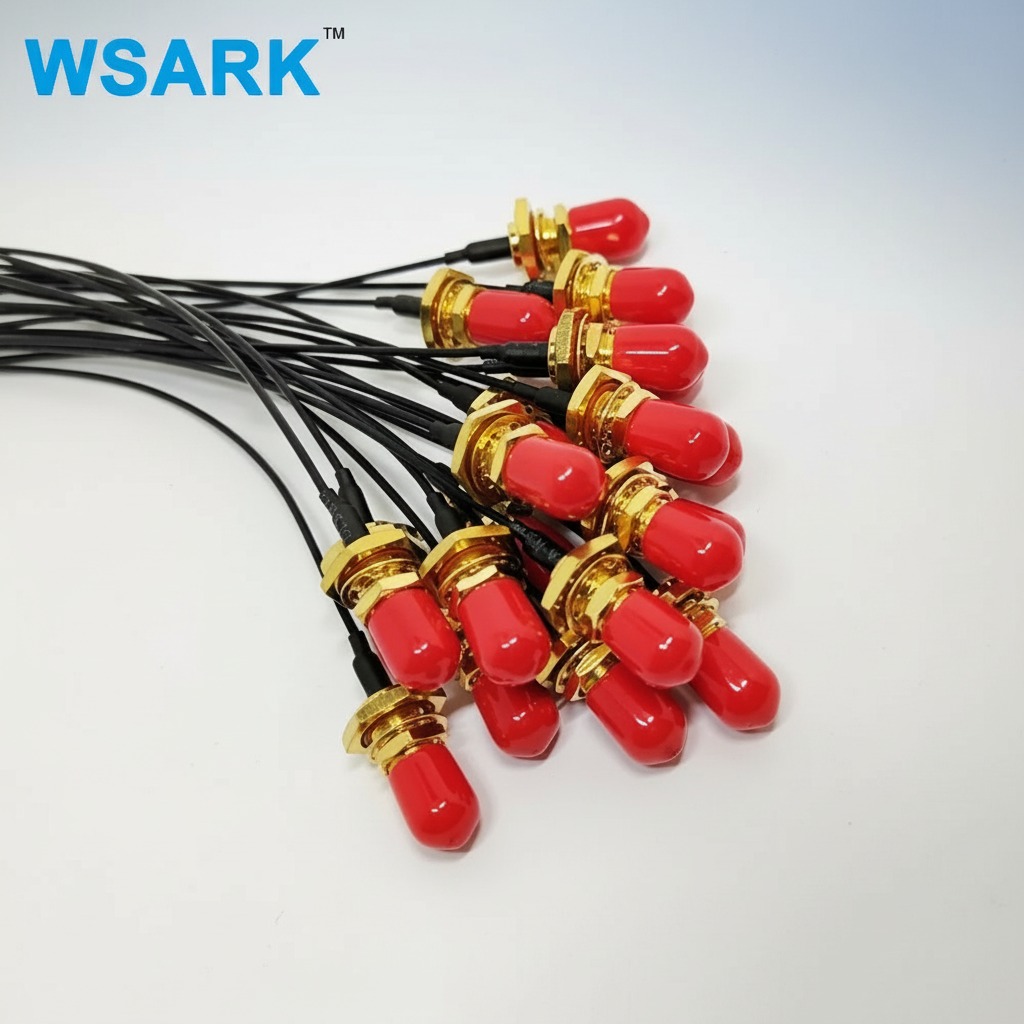
An RF cable assembly is a combination of a coaxial cable and RF connectors that are precisely terminated to form a complete signal transmission path. Unlike standard cables, RF cable assemblies are engineered to maintain controlled impedance and low loss at high frequencies.

Typical RF cable assemblies consist of:

  • A coaxial cable with defined impedance

  • Inner conductor, dielectric, and shielding layers

  • RF connectors assembled with precise termination techniques

The performance of the entire assembly depends on both the cable material and the quality of connector attachment.


2. Key Components of RF Cable Assemblies

Coaxial Cable

The coaxial cable determines signal attenuation, shielding effectiveness, and flexibility. Low-loss cables are commonly used in applications requiring long transmission distances or high-frequency operation.

RF Connectors

RF connectors provide mechanical and electrical interfaces between components. Common connector types include SMA, N-type, TNC, and other industry-standard interfaces. Connector compatibility and precision are essential to maintain impedance matching and reduce signal reflection.

Shielding Structure

High-quality shielding helps prevent external electromagnetic interference and minimizes signal leakage, ensuring stable transmission in complex RF environments.


3. Performance Factors to Consider

Several key parameters influence the performance of RF cable assemblies:

  • Insertion Loss
    Lower loss ensures stronger signal transmission over distance.

  • Impedance Matching
    Consistent impedance helps reduce reflections and standing waves.

  • Frequency Range
    Cable assemblies must support the operating frequency of the system.

  • Mechanical Reliability
    Resistance to vibration, bending, and environmental stress is critical in industrial and outdoor installations.

Proper selection and assembly of these elements are essential for reliable system operation.


4. Applications of RF Cable Assemblies

RF cable assemblies are widely used in:

  • Wireless base stations and antennas

  • RF testing and measurement equipment

  • Communication modules and transceivers

  • Industrial and outdoor wireless systems

In these applications, precision-assembled cables help maintain signal integrity and reduce system failures caused by poor interconnections.


5. Importance of Custom RF Cable Assemblies

Standard off-the-shelf cables may not always meet specific system requirements. Custom RF cable assemblies allow for tailored cable lengths, connector combinations, and performance specifications to match unique installation environments and technical demands.

Customized solutions can help:

  • Optimize signal performance

  • Improve installation flexibility

  • Enhance overall system reliability


Conclusion

RF cable assemblies are essential components in wireless communication systems, ensuring stable and efficient transmission of high-frequency signals. By selecting the appropriate cable type, connector configuration, and assembly quality, system designers can significantly improve performance and long-term reliability.

Zhenjiang Woshuang Wireless RF Technology Co., Ltd provides customized RF cable assemblies based on customer requirements, supporting various cable types and connector configurations for wireless communication, RF testing, and industrial applications.

Featured Blogs

Tag:

  • RF transmission
  • antenna system
  • wireless equipment
Share On
Featured Blogs
How to Select the Right RF Antenna for Your Wireless Application

How to Select the Right RF Antenna for Your Wireless Application

RF antennas are fundamental components in wireless communication systems, playing a crucial role in signal transmission, coverage range, and overall system reliability. Selecting the right RF antenna is not simply a matter of matching frequency—it requires a comprehensive evaluation of application requirements, installation environment, and performance expectations. This article outlines the key factors to consider when choosing an RF antenna and helps engineers and system integrators make informed decisions for different wireless applications.

Why RF Surge Protectors Are Essential for Outdoor Communication Equipment

Why RF Surge Protectors Are Essential for Outdoor Communication Equipment

Outdoor wireless communication systems operate in harsh and unpredictable environments. Antennas, base stations, and RF transmission equipment are frequently exposed to lightning strikes, electromagnetic interference, and sudden power surges. Without proper protection, these external threats can cause irreversible damage, system downtime, and significant maintenance costs. RF surge protectors play a critical role in safeguarding outdoor communication equipment and ensuring long-term system reliability.

RF Attenuators: Functions, Types, and Applications in Wireless Systems

RF Attenuators: Functions, Types, and Applications in Wireless Systems

RF attenuators are essential passive components used in wireless and RF systems to reduce signal power while preserving waveform integrity and signal quality. They play a critical role in protecting sensitive equipment, improving measurement accuracy, and stabilizing system performance across a wide range of communication and testing applications.

Key RF Components Used in Modern Wireless Communication Systems

Key RF Components Used in Modern Wireless Communication Systems

Modern wireless communication systems rely on a wide range of RF components working together to ensure stable, efficient, and reliable signal transmission. Each RF component performs a specific function in maintaining signal integrity, minimizing loss, and protecting sensitive equipment across the entire communication chain. Understanding the role of these key RF components is essential for system designers, integrators, and engineers involved in wireless, broadcasting, and industrial communication applications.

Understanding RF Cable Assemblies for Wireless Communication Systems

Understanding RF Cable Assemblies for Wireless Communication Systems

RF cable assemblies play a critical role in wireless communication systems by transmitting high-frequency signals between antennas, transmitters, receivers, and RF devices. A well-designed RF cable assembly ensures minimal signal loss, stable impedance, and consistent system performance, especially in high-frequency and high-reliability applications. In modern wireless systems, the quality of cable assemblies directly affects signal integrity, system efficiency, and long-term operational stability.

What Is an RF Coaxial Connector and How to Choose the Right One?

What Is an RF Coaxial Connector and How to Choose the Right One?

RF coaxial connectors are essential components in wireless communication systems, ensuring stable and reliable signal transmission between RF devices, antennas, and coaxial cables. Choosing the right RF coaxial connector directly affects signal integrity, system reliability, and long-term operational performance. In high-frequency applications, even small mismatches or poor connector quality can result in signal loss, reflection, or system instability.