
1. Operating Frequency and Bandwidth
The first and most critical factor in antenna selection is the operating frequency. RF antennas must be designed to work within specific frequency bands to ensure optimal performance and minimal signal loss.
Common frequency ranges include:
-
Sub-GHz bands (e.g. 433 MHz, 868 MHz, 915 MHz) for long-range and low-power applications
-
2.4 GHz and 5.8 GHz for Wi-Fi, Bluetooth, and ISM band applications
-
Cellular bands for LTE, NB-IoT, and 5G communication
In addition to center frequency, bandwidth is equally important. Applications that require multi-band or wideband communication should use antennas specifically designed to support broader frequency ranges.
2. Antenna Gain and Coverage Requirements
Antenna gain determines how effectively an antenna focuses RF energy in a particular direction. Higher gain antennas can transmit signals over longer distances but usually have narrower radiation patterns.
-
Low-gain antennas provide wider coverage and are suitable for short-range or mobile devices
-
High-gain antennas are ideal for point-to-point communication or fixed installations requiring long-distance transmission
Choosing the appropriate gain involves balancing coverage area, communication distance, and system layout.
3. Radiation Pattern and Directionality
Radiation pattern describes how RF energy is distributed around the antenna. Depending on the application, different patterns may be required:
-
Omnidirectional antennas radiate signals uniformly in all horizontal directions and are commonly used in indoor systems, gateways, and mobile equipment
-
Directional antennas concentrate energy in a specific direction, improving range and reducing interference, often used in outdoor or point-to-point links
Understanding the radiation pattern helps optimize system performance and minimize signal interference.
4. Polarization Matching
Polarization refers to the orientation of the electromagnetic wave emitted by the antenna, typically vertical, horizontal, or circular. For best performance, the transmitting and receiving antennas should have the same polarization.
Polarization mismatch can result in significant signal loss, especially in long-distance or high-frequency applications. In environments with frequent signal reflections, circular polarization may help improve communication stability.
5. Installation Environment: Indoor vs Outdoor
The operating environment has a major impact on antenna design and material selection.
-
Indoor antennas prioritize compact size, aesthetic integration, and ease of installation
-
Outdoor antennas require weatherproof housings, UV resistance, corrosion protection, and stable mechanical structures
Industrial and harsh environments may also demand antennas with higher IP ratings and robust connectors.
6. Size, Mounting, and Connector Type
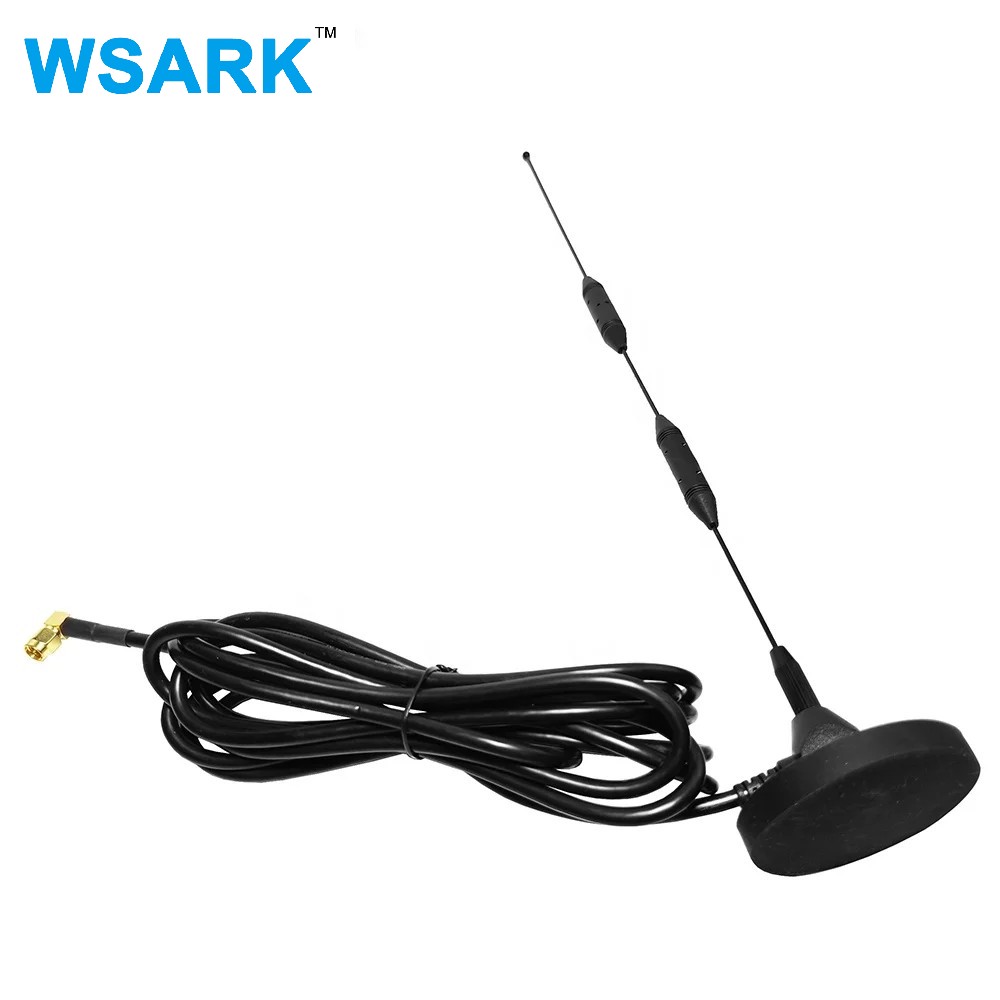
Physical constraints often influence antenna choice. Factors such as antenna size, mounting method (magnetic mount, panel mount, pole mount), and connector type (SMA, RP-SMA, N-type, etc.) must be compatible with the device and installation setup.
Proper mechanical integration ensures not only performance stability but also long-term reliability.
7. Application-Specific Considerations
Different wireless applications place different demands on RF antennas, including:
-
IoT and smart devices
-
Industrial automation and monitoring systems
-
Wireless data transmission and telemetry
-
Remote control and signaling systems
Selecting an antenna tailored to the specific application helps maximize system efficiency and communication reliability.
Conclusion
Choosing the right RF antenna is a key step in designing a reliable and efficient wireless communication system. By carefully considering frequency, gain, radiation pattern, polarization, installation environment, and application requirements, engineers can significantly improve system performance and reduce communication issues.
Zhenjiang Woshuang Wireless RF Technology Co., Ltd provides a wide range of RF antennas suitable for wireless communication, industrial systems, and customized RF solutions. With professional design capabilities and application support, we help customers select and develop antenna solutions that meet their specific needs.
Frequently Asked Questions (FAQ)
1. Why is operating frequency the most critical factor when selecting an RF antenna?
Operating frequency determines whether an antenna can efficiently transmit and receive signals for your specific application. Antennas must be designed to work within particular frequency bands to achieve optimal performance and minimal signal loss. Common bands include Sub-GHz (433 MHz, 868 MHz, 915 MHz) for long-range, low-power applications; 2.4 GHz and 5.8 GHz for Wi-Fi, Bluetooth, and ISM band applications; and cellular bands for LTE, NB-IoT, and 5G communication. Using an antenna outside its designed frequency range results in poor performance, high VSWR, and reduced communication reliability.
2. What is the difference between low-gain and high-gain antennas, and when should I use each?
-
Low-gain antennas provide wider coverage angles and are suitable for short-range or mobile devices where signal needs to be distributed evenly in all directions. They are ideal for indoor systems, gateways, and IoT devices.
-
High-gain antennas focus RF energy in a specific direction, allowing longer transmission distances but with narrower radiation patterns. They are best for point-to-point communication or fixed installations requiring long-distance links.
Choosing the appropriate gain involves balancing coverage area, communication distance, and your system's physical layout.
3. What is the difference between omnidirectional and directional antennas?
-
Omnidirectional antennas radiate signals uniformly in all horizontal directions, resembling a donut-shaped pattern. They are commonly used in indoor systems, gateways, mobile equipment, and any application where devices are located in multiple directions relative to the antenna.
-
Directional antennas concentrate RF energy in a specific direction, improving range and reducing interference from other directions. They are often used in outdoor point-to-point links, backhaul connections, and applications where both communicating devices are in fixed positions.
4. Why is polarization matching important, and what happens if it is mismatched?
Polarization refers to the orientation of the electromagnetic wave emitted by the antenna—typically vertical, horizontal, or circular. For maximum signal transfer, the transmitting and receiving antennas should have the same polarization. A polarization mismatch can result in significant signal loss, often 20 dB or more, especially in long-distance or high-frequency applications. In environments with frequent signal reflections (such as indoors or urban areas), circular polarization may help improve communication stability by reducing the effects of polarization changes caused by reflections.
5. What are the key differences between indoor and outdoor antennas?
-
Indoor antennas prioritize compact size, aesthetic integration, and ease of installation. They typically do not require weatherproofing but may need to blend with interior decor.
-
Outdoor antennas require weatherproof housings, UV resistance, corrosion protection, and stable mechanical structures to withstand rain, sun, temperature extremes, and wind. For industrial or harsh environments, antennas may also need higher IP ratings (e.g., IP67) and robust, sealed connectors to prevent moisture ingress and ensure long-term reliability.
6. What physical factors should I consider when integrating an antenna into my device?
Several mechanical factors influence antenna choice and performance:
-
Size: The antenna must fit within the available space without being detuned by nearby components.
-
Mounting method: Options include magnetic mounts (for temporary or vehicle installations), panel mounts (for enclosures), pole mounts (for outdoor towers), and PCB mounts (for embedded designs).
-
Connector type: Common RF connectors include SMA, RP-SMA, N-type, and U.FL. The connector must match your device's RF port for proper impedance matching (typically 50 ohms).
Proper mechanical integration ensures performance stability and long-term reliability.
7. How do application requirements influence antenna selection?
Different wireless applications place unique demands on RF antennas:
-
IoT and smart devices: Often require compact, low-profile antennas with good efficiency in Sub-GHz or 2.4 GHz bands.
-
Industrial automation and monitoring systems: May need rugged, weatherproof antennas with stable performance across temperature variations.
-
Wireless data transmission and telemetry: Benefit from high-gain directional antennas for long-distance links.
-
Remote control and signaling systems: Typically use omnidirectional antennas for reliable coverage in all directions.
Selecting an antenna tailored to your specific application maximizes system efficiency and communication reliability.
8. How does bandwidth affect antenna performance, and why is it important?
Bandwidth refers to the range of frequencies over which an antenna performs within acceptable parameters (such as VSWR below 2:1). Applications that require multi-band or wideband communication—such as devices supporting both 2.4 GHz Wi-Fi and Bluetooth, or cellular modems operating across multiple LTE bands—must use antennas specifically designed to support broader frequency ranges. Insufficient bandwidth can lead to poor performance, high reflected power, and reduced communication range at the edges of the desired frequency band. Zhenjiang Woshuang Wireless RF Technology Co., Ltd. offers antennas with tailored bandwidths to meet diverse application requirements.