
Understanding Trailer Dust Caps: Essential Protection for Your Trailer
When it comes to maintaining your trailer in top condition, trailer dust caps play a crucial role in safeguarding vital components from environmental hazards. These small yet indispensable accessories are designed to keep dust, dirt, and moisture away from wheel hubs and bearings, ensuring smooth operation and longevity. As a trailer owner, investing in quality trailer dust caps can prevent costly repairs and extend the life of your equipment. In this article, we'll explore the importance of trailer dust caps, their types, and how to choose the right ones for your needs.
What Are Trailer Dust Caps and Why Do You Need Them?
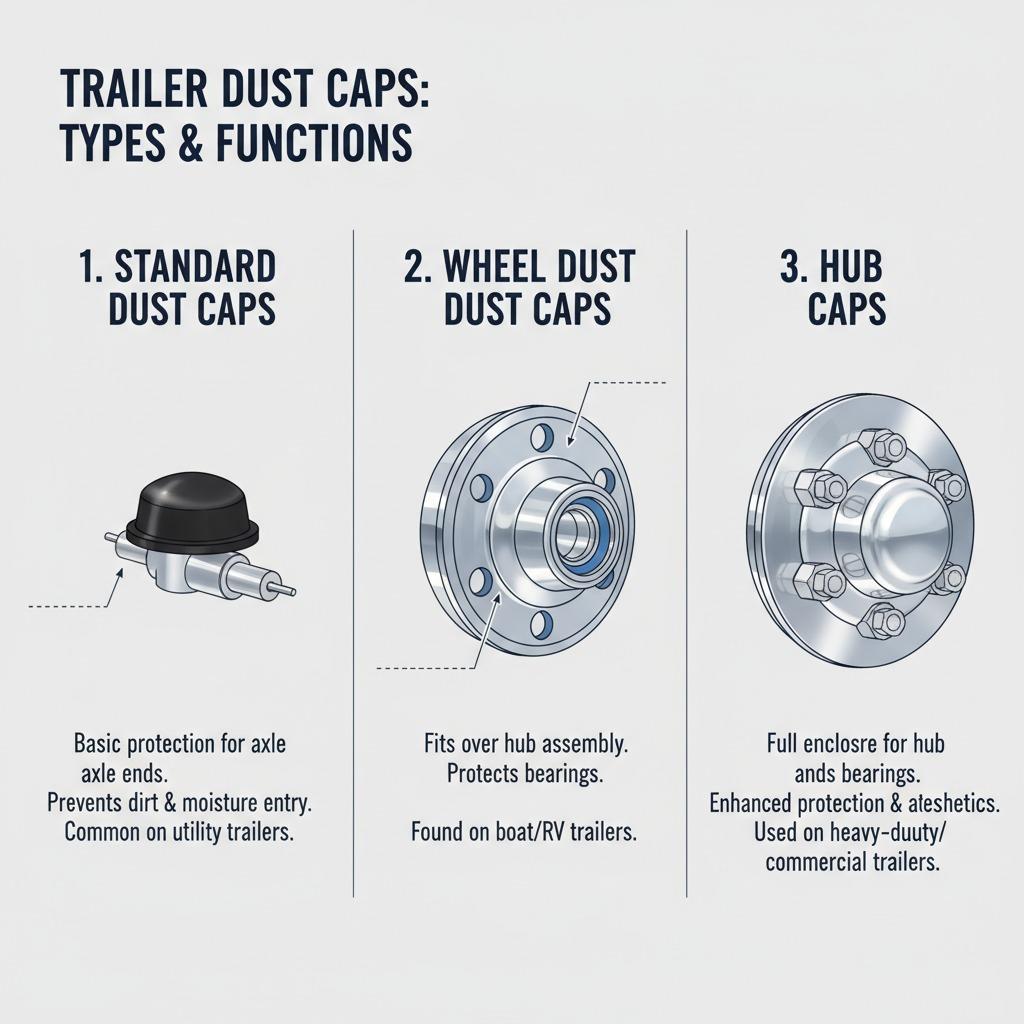
Trailer dust caps are protective covers that fit over the hubs of trailer wheels to shield the internal parts from contaminants. Commonly used in various trailer applications, from utility trailers to RVs, these caps are essential for maintaining the integrity of bearings and spindles. Without proper protection, dust and debris can infiltrate the hub, leading to accelerated wear, overheating, and potential failure during travel. By using reliable trailer dust caps, you not only protect your investment but also enhance safety on the road.
The primary function of trailer dust caps is to create a barrier against the elements. They are typically made from durable materials like plastic, metal, or rubber, designed to withstand impacts and weather exposure. For instance, in dusty or off-road environments, opting for heavy-duty trailer dust caps can make a significant difference in performance. Regular inspection and replacement of these caps are recommended to ensure they remain effective, as cracks or loose fits can compromise their protective abilities.
Exploring Trailer Wheel Dust Caps: A Closer Look
Trailer wheel dust caps are a specific subset of protective gear focused on wheel assemblies. These caps are engineered to fit snugly over the wheel hub, preventing the ingress of fine particles that could otherwise grind against moving parts. Unlike general covers, trailer wheel dust caps often feature grease fittings or vents to allow for lubrication while keeping contaminants out. This balance is key to maintaining optimal wheel rotation and reducing friction-related issues.
One of the advantages of high-quality trailer wheel dust caps is their ease of installation and removal. Many models come with push-on or clip mechanisms that make maintenance straightforward, even for those without advanced mechanical skills. Additionally, some trailer wheel dust caps are color-coded or marked for easy identification during routine checks. When selecting these, consider the size and type of your trailer's wheels—mismatches can lead to ineffective sealing and premature failure.
In practical terms, trailer wheel dust caps contribute to overall trailer efficiency. By keeping hubs clean, they minimize the need for frequent bearing repacks, saving time and money. For frequent haulers or those in construction, investing in reinforced trailer wheel dust caps can prevent downtime caused by hub contamination, ensuring that your operations run smoothly without interruptions.
The Role of Trailer Hub Caps in Comprehensive Protection
Trailer hub caps extend the concept of protection beyond just dust prevention, offering a more comprehensive shield for the entire hub assembly. These caps often incorporate additional features like seals or flanges that provide extra security against water ingress during wet conditions. Unlike basic trailer dust caps, trailer hub caps are built for versatility, suitable for both light-duty and heavy-duty trailers.
Choosing the right trailer hub caps involves assessing your trailer's load capacity and usage patterns. For example, if you frequently tow in rainy or muddy terrains, opt for waterproof trailer hub caps with robust sealing technology. These caps not only protect against environmental factors but also help retain grease within the hub, promoting consistent lubrication. Regular cleaning of trailer hub caps is advised to remove any accumulated grime that might affect their fit.
Moreover, trailer hub caps can enhance the aesthetic appeal of your trailer while serving a functional purpose. Available in various finishes, they can be matched to your vehicle's color scheme for a polished look. From a maintenance perspective, trailer hub caps simplify inspections, as they allow quick access to internal components without disassembly. This makes them a favorite among DIY enthusiasts and professional mechanics alike.
Dust Caps for Trailers: Selection Tips and Best Practices
Dust caps for trailers come in a wide range of sizes and styles to accommodate different hub configurations. When shopping for dust caps for trailers, it's essential to measure your hub diameter accurately—common sizes range from 1.5 inches to 3 inches or more. Always verify compatibility with your trailer's axle type, whether it's a straight, drop, or torsion setup, to ensure a proper fit.
Material choice is another critical factor for dust caps for trailers. Plastic options are lightweight and corrosion-resistant, ideal for general use, while metal variants offer superior durability for rugged applications. Rubber-edged dust caps for trailers provide flexibility and better sealing on uneven surfaces. To maximize effectiveness, pair your dust caps for trailers with compatible bearings and seals for a complete protective system.
Installation best practices for dust caps for trailers include cleaning the hub thoroughly before fitting and applying a light coat of grease to the cap's interior for better adhesion. Avoid over-tightening, as this can damage the cap or hub. For long-term use, store spare dust caps for trailers in a dry place to prevent degradation. By following these tips, you can ensure that your trailer's wheels remain protected and reliable.
Maintaining Your Trailer Dust Caps for Longevity
Proper maintenance of trailer dust caps is vital to their performance. Regularly inspect for signs of wear, such as cracks, dents, or loosening, and replace them promptly if needed. In harsh environments, this might mean checking after every few trips. Cleaning trailer dust caps with mild soap and water removes buildup without compromising the material.
Integrating trailer dust caps into your routine trailer care regimen can prevent many common issues. For example, combining them with wheel bearing checks ensures holistic protection. If you're upgrading your trailer setup, consider kits that include trailer wheel dust caps, trailer hub caps, and dust caps for trailers for a uniform solution.
In conclusion, trailer dust caps, along with trailer wheel dust caps, trailer hub caps, and specialized dust caps for trailers, are fundamental to safe and efficient trailer operation. By understanding their roles and selecting quality products, you can avoid pitfalls and enjoy hassle-free travels. Prioritize protection today for a smoother journey tomorrow.
Frequently Asked Questions (FAQ)
1. What are trailer dust caps, and why are they essential for my trailer?
Trailer dust caps are protective covers that fit over the wheel hubs of your trailer. Their primary function is to shield internal components such as bearings and spindles from contaminants including dust, dirt, moisture, and road debris. Without proper dust caps, these particles can infiltrate the hub, leading to accelerated wear, overheating, bearing failure, and potentially dangerous wheel separation while towing. By keeping hubs clean and sealed, trailer dust caps extend equipment life, enhance road safety, and reduce costly repairs.
2. What is the difference between trailer dust caps, trailer wheel dust caps, and trailer hub caps?
While these terms are sometimes used interchangeably, they have distinct meanings:
| Component | Coverage | Key Features | Best For |
|---|---|---|---|
| Trailer Dust Caps | General hub protection | Basic barrier against dust and dirt | Standard utility trailers, general use |
| Trailer Wheel Dust Caps | Wheel hub-specific | Often includes grease fittings or vents for lubrication; push-on or clip mechanisms | Frequent haulers, off-road environments |
| Trailer Hub Caps | Full hub assembly protection | Additional seals, flanges, waterproofing; often decorative finishes | Heavy-duty trailers, wet/muddy terrains, aesthetic enhancement |
Trailer hub caps offer the most comprehensive protection, while standard dust caps provide essential basic coverage. All three are crucial depending on your trailer's usage and environmental exposure.
3. What materials are trailer dust caps made from, and which should I choose?
Trailer dust caps are manufactured from three primary materials, each with distinct advantages:
| Material | Advantages | Limitations | Recommended Use |
|---|---|---|---|
| Plastic (e.g., Nylon, Polyethylene) | Lightweight, corrosion-resistant, affordable, easy to install | Less impact resistance, may crack under extreme stress | General-purpose trailers, light-duty hauling |
| Metal (e.g., Steel, Stainless Steel, Aluminum) | Superior durability, impact resistance, long lifespan | Heavier, more expensive, may rust if not coated | Heavy-duty trailers, off-road, construction, frequent use |
| Rubber / Rubber-edged | Excellent sealing on uneven surfaces, flexible, vibration-resistant | Can degrade over time with UV exposure | Trailers operating on rough terrain, dusty environments |
For most standard applications, quality plastic caps suffice. For rugged or frequent use, metal caps offer better longevity. Rubber-edged caps provide superior sealing for uneven hub surfaces.
4. How do I select the correct size trailer dust cap for my trailer?
Proper sizing is critical for effective protection. Follow these steps:
-
Measure the hub diameter: Use a caliper or ruler to measure the outside diameter of your trailer's hub where the cap will fit. Common sizes range from 1.5 inches to 3 inches or larger.
-
Identify your axle type: Determine whether your trailer has a straight axle, drop axle, or torsion axle, as this affects hub dimensions.
-
Check compatibility with bearings: Ensure the dust cap matches the bearing and spindle configuration of your trailer.
-
Consult your trailer manual: Manufacturer specifications often list the correct dust cap size and part number.
-
When in doubt, remove an existing cap: Take the old cap to a trailer supply store or measure it directly for an exact match.
Using an incorrectly sized cap will result in poor sealing, allowing contaminants to enter and defeat the purpose of protection.
5. How do I properly install and maintain trailer dust caps?
Installation best practices:
-
Clean thoroughly: Remove any dirt, old grease, or debris from the hub surface before installation.
-
Apply light lubrication: Apply a thin coat of grease to the inside rim of the dust cap for better adhesion and sealing.
-
Seat evenly: Tap the cap gently and evenly around the edges using a soft-faced mallet or a block of wood to avoid deformation.
-
Avoid over-tightening: Do not hammer excessively, as this can crack plastic caps or distort metal ones.
-
Check fit: Ensure the cap sits flush and securely without wobbling.
Maintenance tips:
-
Regular inspections: Check caps before each towing trip for cracks, dents, looseness, or missing caps.
-
Clean periodically: Wipe away accumulated grime with mild soap and water; avoid harsh solvents that may degrade materials.
-
Replace when damaged: Any cap showing signs of wear, cracking, or poor fit should be replaced immediately.
-
Check after harsh conditions: After off-road use, heavy rain, or dusty environments, inspect caps more frequently.
In harsh environments, consider inspecting after every few trips to ensure continued protection.
6. What industries and applications benefit most from quality trailer dust caps?
Trailer dust caps are essential across a wide range of towing applications:
| Industry / Application | Specific Needs | Recommended Cap Type |
|---|---|---|
| Construction & Landscaping | Heavy loads, frequent off-road use, dust and debris exposure | Heavy-duty metal caps, rubber-edged for sealing |
| Agriculture & Farming | Mud, soil, moisture, long hours of operation | Waterproof hub caps with robust sealing |
| RV & Camping Trailers | Mixed road conditions, occasional off-pavement, aesthetic appeal | Color-matched hub caps, corrosion-resistant materials |
| Boat Trailers | Constant water exposure, saltwater corrosion | Marine-grade stainless steel or sealed plastic caps |
| Utility & Cargo Trailers | General-purpose hauling, varied environments | Standard plastic or metal caps based on frequency of use |
| Commercial Fleet Operations | High mileage, consistency across multiple trailers | Bulk-purchased uniform caps, easy-to-inspect designs |