
Understanding Directional Couplers: Essential Components in RF Systems
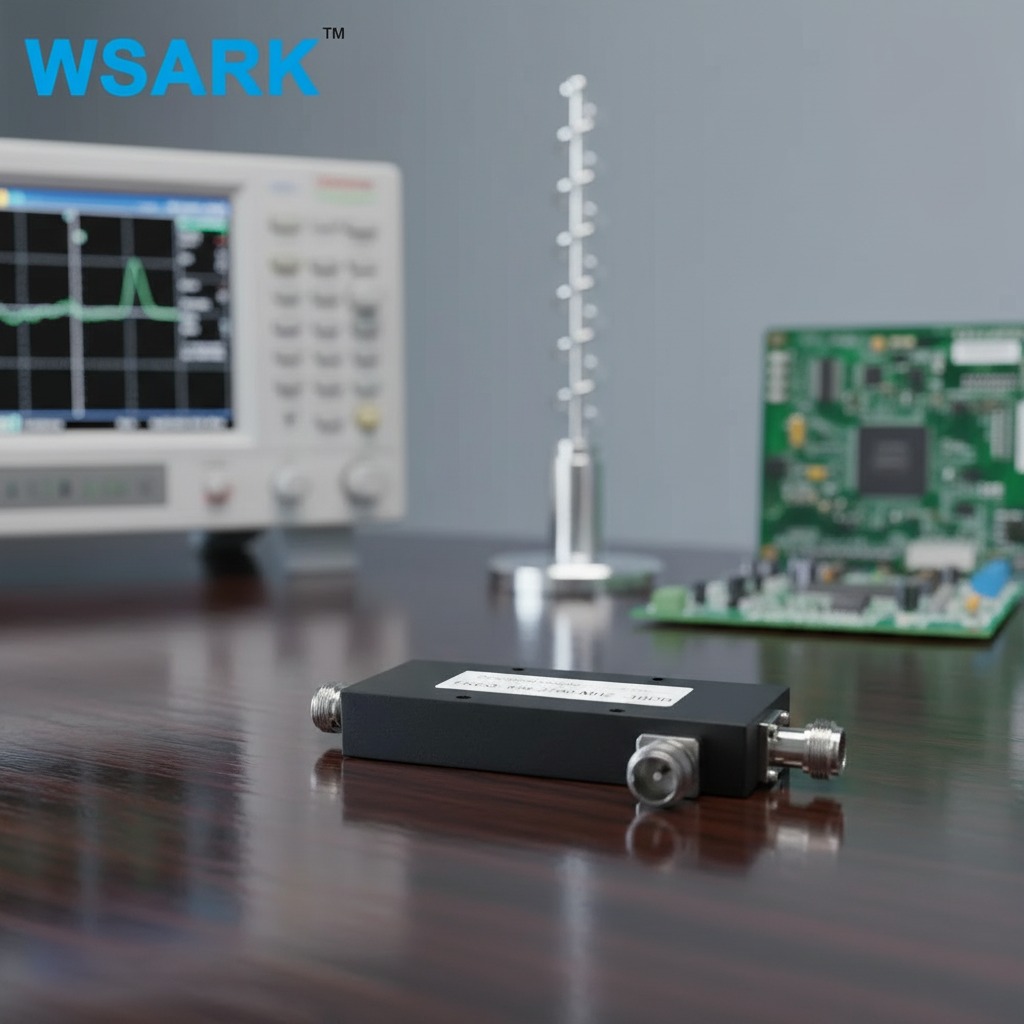
In the realm of radio frequency (RF) engineering, a directional coupler stands out as a fundamental passive device used for sampling or splitting microwave signals. This versatile component allows engineers to monitor signal power without significantly disrupting the main transmission line, making it indispensable in various communication setups. At WSARK, we specialize in high-performance RF solutions, and our directional couplers are engineered to meet the demanding needs of modern wireless infrastructures.
Directional couplers operate on the principle of coupling a portion of the electromagnetic power traveling in one transmission line to another line, typically through electromagnetic fields. This process is crucial for applications requiring precise power measurement, signal monitoring, and isolation. Whether in laboratory testing or deployed in real-world systems, these devices ensure reliable performance across broad frequency bands.
Exploring the Optical Directional Coupler
An optical directional coupler represents an advanced adaptation of the basic directional coupler concept, tailored for light signals in fiber optic networks. Unlike traditional RF versions, the optical directional coupler manipulates optical power by coupling light between waveguides, often using evanescent field interactions in integrated optics. This makes it vital for photonic devices in telecommunications, where it splits or combines optical signals with minimal loss.
In fiber optic systems, the optical directional coupler facilitates efficient power division for applications like wavelength division multiplexing (WDM) and optical switching. Its design, typically based on fused biconical taper or planar waveguide technology, ensures low insertion loss and high directivity. For instance, in high-speed data transmission networks, these couplers enable the branching of signals to multiple paths, supporting the backbone of internet and data center connectivity.
At WSARK, while our expertise lies in RF technologies, understanding the parallels between optical and microwave directional couplers highlights the versatility of coupling principles across electromagnetic spectra. This knowledge informs our innovations, ensuring our products can integrate seamlessly with hybrid systems that blend optical and RF elements.
The Role of Microwave Directional Couplers in Communication
Microwave directional couplers are specifically optimized for higher frequency bands, typically in the GHz range, and are essential in radar, satellite, and wireless communication systems. These devices provide a controlled amount of power coupling from the main line to a secondary port, allowing for accurate measurements of forward and reflected power. The microwave directional coupler's ability to offer high isolation between ports minimizes interference, which is critical for maintaining signal quality in complex environments.
Key parameters like coupling factor, directivity, and insertion loss define the performance of a microwave directional coupler. For example, a coupling factor of -10dB means that 10% of the input power is coupled to the secondary line, which is ideal for monitoring without overloading detectors. In broadcasting and cellular base stations, these couplers enable technicians to assess signal strength and detect faults in real-time, enhancing network reliability.
WSARK's microwave directional couplers, such as our flagship model operating from 698-2700 MHz, exemplify this precision. With excellent isolation and robust construction, they withstand harsh conditions in antenna systems and RF chains, supporting professionals in optimizing coverage and throughput.
Integrating Fiber Optic Couplers in Modern Networks
A fiber optic coupler extends the utility of directional coupling into the optical domain, serving as a building block for passive optical networks (PON). This device evenly or unevenly splits light signals from a single input fiber to multiple output fibers, enabling star or tree topologies in broadband distribution. Unlike active splitters, the fiber optic coupler relies on passive fusion techniques, ensuring long-term stability and low maintenance.
In practical terms, fiber optic couplers are deployed in FTTH (Fiber to the Home) installations, where they divide a single optical signal to serve multiple households without electronic amplification. Their wavelength-independent operation across visible and near-infrared spectra makes them suitable for diverse applications, from cable television to 5G backhaul. High-quality fiber optic couplers exhibit return loss exceeding 50dB, preventing reflections that could degrade performance.
When considering hybrid setups, combining fiber optic couplers with RF components like directional couplers allows for comprehensive signal management. WSARK recognizes this synergy, as our directional couplers often interface with optical front-ends in advanced communication architectures, bridging the gap between optical transport and RF processing.
Why Choose WSARK's Directional Coupler for Your Applications
Introducing the WSARK Directional Coupler, meticulously designed to facilitate optimal signal distribution in RF communication systems. This device operates efficiently within a frequency range of 698-2700 MHz, delivering steadfast performance suitable for a variety of applications, including wireless communication and antenna systems. Featuring a coupling factor of -10dB, it provides excellent isolation and matches, ensuring minimal loss and superior signal integrity for precise measurements and effective signal routing.
Its robust construction and high-quality connectors ensure durability and reliability, making it a vital component in any RF setup. Ideal for professionals working in areas such as cellular networks, broadcasting, and satellite communications, this directional coupler is crafted to support seamless integration and enhance the overall performance of your network. With WSARK’s commitment to innovative technology, this device embodies both functionality and efficiency.
In comparison to optical directional couplers or fiber optic couplers, the WSARK model focuses on microwave frequencies but shares the core goal of reliable power handling. Engineers appreciate its compact form factor, which simplifies installation in space-constrained environments like mobile towers or lab benches. Regular calibration ensures consistent coupling accuracy, even under varying loads.
Applications and Best Practices for Directional Couplers
Directional couplers find extensive use in test and measurement equipment, where they enable vector network analyzers to characterize amplifiers and filters accurately. In the microwave domain, a microwave directional coupler is often paired with detectors to create power meters, providing instantaneous feedback on system health. For optical systems, the optical directional coupler supports research in quantum computing and sensor networks, where precise light control is paramount.
Best practices include selecting a directional coupler with directivity greater than 20dB to avoid measurement errors from unwanted reflections. Proper impedance matching at all ports prevents signal distortions, and environmental shielding protects against electromagnetic interference. In fiber optic applications, ensuring clean connector interfaces maximizes the efficiency of the fiber optic coupler.
WSARK advises integrating our directional coupler into your workflow with complementary tools like attenuators and isolators for a complete RF solution. This holistic approach not only boosts performance but also extends equipment lifespan, reducing operational costs over time.
Future Trends in Directional Coupler Technology
As communication technologies evolve towards 6G and beyond, directional couplers will play a pivotal role in millimeter-wave and terahertz systems. Innovations in materials, such as metamaterials for optical directional couplers, promise even tighter integration and broader bandwidths. In the microwave realm, hybrid couplers combining digital control could enable adaptive coupling for dynamic networks.
For fiber optic couplers, advancements in silicon photonics are miniaturizing devices for on-chip applications, revolutionizing data centers. WSARK is at the forefront, investing in R&D to enhance our directional couplers with these emerging capabilities, ensuring our customers stay ahead in a rapidly advancing field.
In summary, whether you're dealing with a directional coupler in RF, exploring optical directional couplers for photonics, or leveraging microwave directional couplers and fiber optic couplers in hybrid setups, these devices remain cornerstones of signal management. With WSARK's reliable solutions, you can achieve superior performance and innovation in your projects.