
Understanding Power Dividers in RF Applications
Power dividers are fundamental components in radio frequency (RF) systems, enabling the efficient distribution of signals across multiple paths. At Zhenjiang Woshuang Radio Frequency Technology Co., Ltd., we specialize in delivering high-quality RF solutions that meet the demands of modern telecommunications, broadcasting, and testing environments. As your RF solutions leader, we prioritize innovation and customer satisfaction, providing everything from research and development to comprehensive after-sales support. In this article, we'll explore the intricacies of power dividers, including RF power dividers, 2-way power divider designs, 4-way power divider configurations, and splitter RF functionalities, to help you understand their critical role in ensuring seamless signal management.
The Basics of RF Power Dividers
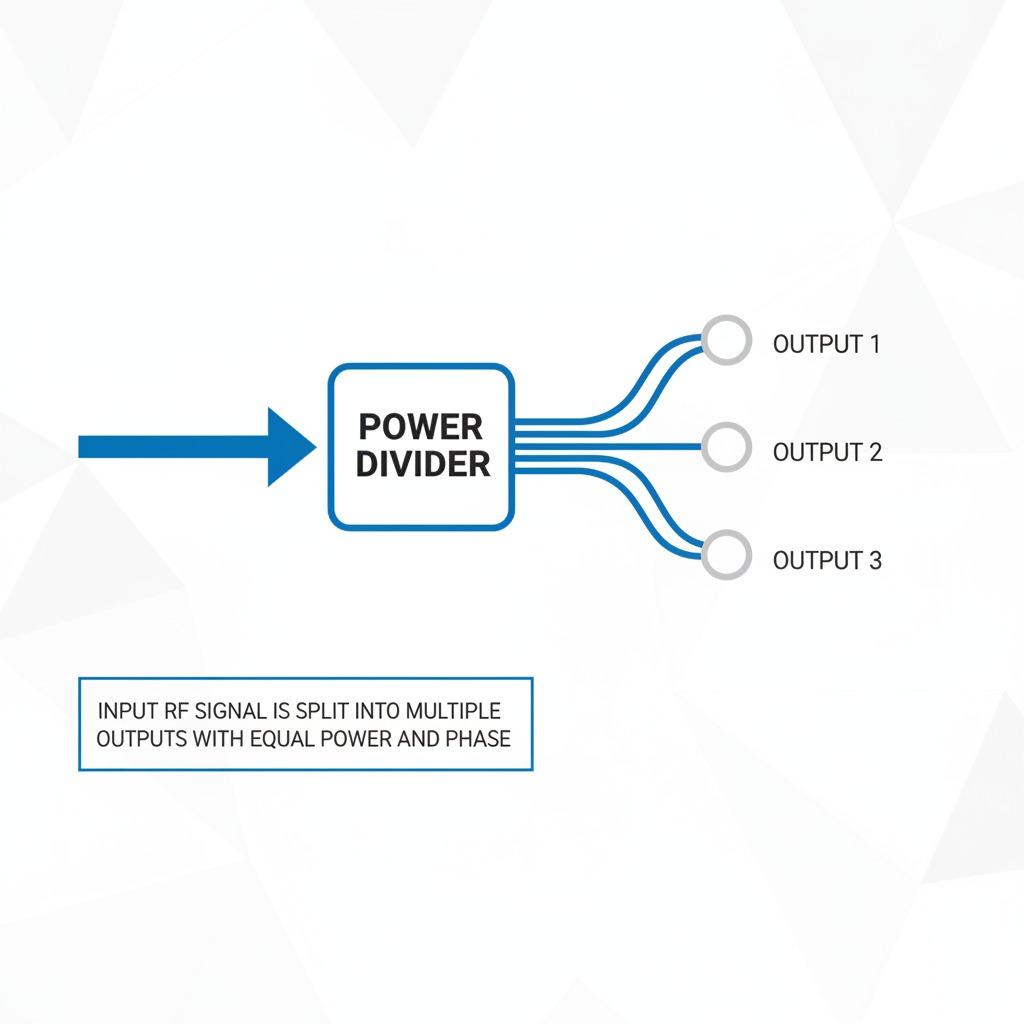
RF power dividers are specialized devices designed to split an input RF signal into two or more equal or unequal output signals while maintaining signal integrity and minimizing losses. These components are essential in applications where signal distribution is necessary, such as in antenna arrays, radar systems, and multi-channel communication setups. Zhenjiang Woshuang Radio Frequency Technology Co., Ltd. understands the importance of precision in RF engineering, which is why our products are crafted with advanced materials and rigorous testing protocols to ensure reliability.
A key advantage of RF power dividers is their ability to handle high-frequency signals without significant attenuation or phase distortion. For instance, in telecommunications infrastructure, these dividers allow a single transmitter to feed multiple antennas, optimizing coverage and efficiency. The design typically involves transmission line theory, where impedance matching is crucial to prevent reflections that could degrade performance. At our company, we leverage cutting-edge technology to produce RF power dividers that support a wide frequency range, from low MHz to several GHz, making them versatile for various industrial needs.
When selecting an RF power divider, factors like insertion loss, isolation between ports, and power handling capacity must be considered. Insertion loss refers to the power dissipated as heat within the device, while isolation ensures that signals from one output do not interfere with others. Our commitment to quality means that every RF power divider we offer undergoes extensive performance validation, aligning with international standards to deliver consistent results in demanding scenarios.
Exploring 2-Way Power Dividers
A 2-way power divider is one of the most common configurations, splitting an input signal into two equal outputs, each carrying half the input power. This simplicity makes it ideal for applications requiring balanced signal distribution, such as in wireless communication systems and laboratory testing setups. Zhenjiang Woshuang Radio Frequency Technology Co., Ltd. designs 2-way power dividers with robust construction to withstand environmental stresses, ensuring longevity and dependability in field deployments.
The internal architecture of a 2-way power divider often employs a Wilkinson divider topology, which provides excellent isolation and broadband performance. This design uses quarter-wave transmission lines and resistors to achieve phase coherence and minimize unwanted coupling. In practical terms, a 2-way power divider might be used in a base station to divide power between two sectors, enhancing signal reach without compromising quality.
Power handling is a critical specification for 2-way power dividers, especially in high-power RF environments like broadcasting. Our products at Zhenjiang Woshuang are engineered to manage peak powers up to several kilowatts, with features like enhanced thermal management to prevent overheating. Additionally, the compact size of these dividers allows for easy integration into space-constrained systems, supporting our goal of providing comprehensive RF solutions tailored to customer requirements.
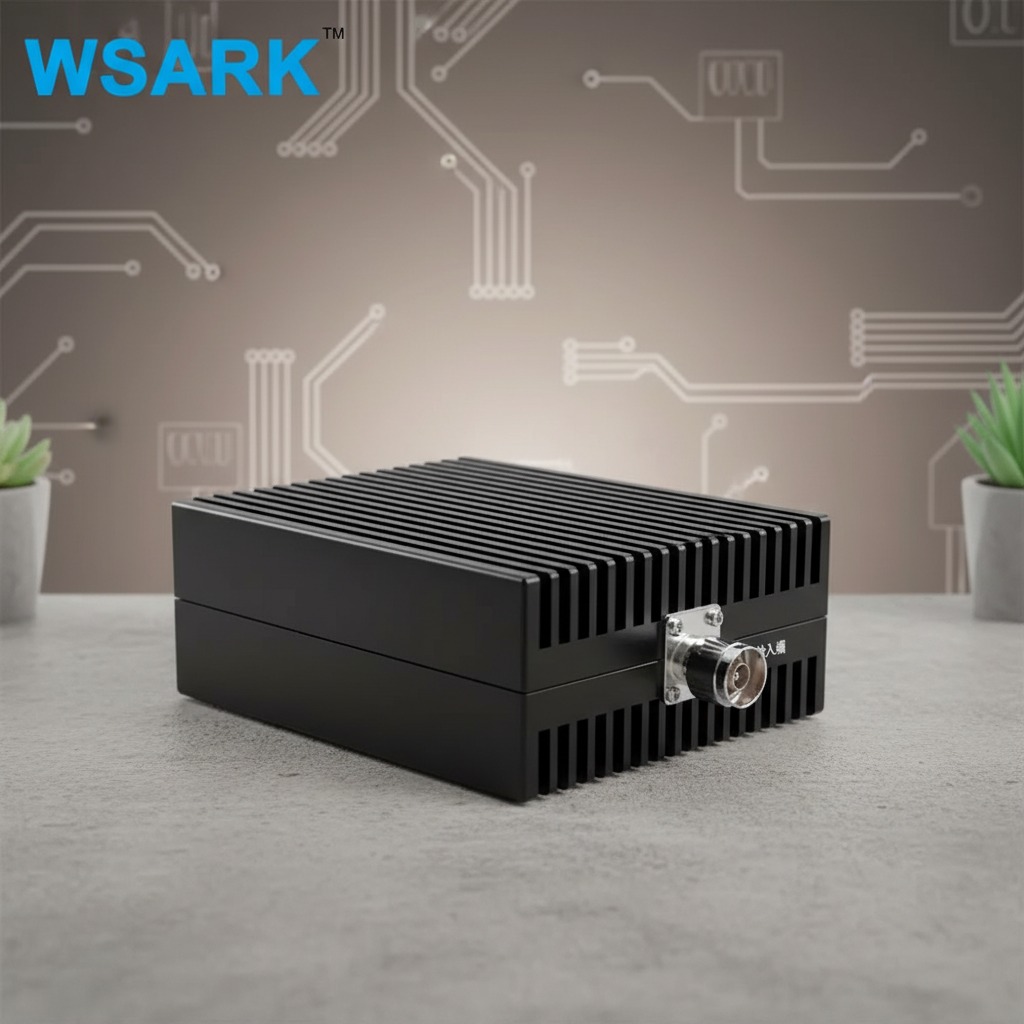
For optimal performance, proper connector selection is vital. Many 2-way power dividers feature N-type or SMA connectors, which offer low VSWR (Voltage Standing Wave Ratio) for minimal signal reflection. We recommend pairing these with complementary components like our WSARK RF Load, which features a precision-engineered N-type connector and advanced heat dissipation through its finned exterior, ideal for absorbing excess power during testing.
Advanced Configurations: 4-Way Power Dividers
Scaling up from the 2-way model, a 4-way power divider distributes the input signal across four outputs, each receiving a quarter of the original power. This configuration is particularly useful in multi-antenna systems, phased arrays, and high-throughput data networks where broader coverage is needed. At Zhenjiang Woshuang Radio Frequency Technology Co., Ltd., our 4-way power dividers are developed with a focus on low insertion loss and high isolation, ensuring that each path maintains signal fidelity.
The design of a 4-way power divider can be more complex, often combining multiple 2-way dividers in a cascaded or corporate structure. This approach allows for even power split while preserving phase alignment, which is crucial for applications like MIMO (Multiple Input Multiple Output) systems in 5G networks. Our engineering team utilizes simulation software to optimize these structures, reducing manufacturing variances and enhancing overall efficiency.
In broadcasting environments, 4-way power dividers enable a single high-power transmitter to feed multiple distribution lines, streamlining operations and reducing costs. However, challenges such as increased insertion loss with more ports must be addressed through high-quality materials like low-loss dielectrics and precision machining. Zhenjiang Woshuang's dedication to technological advancement ensures our 4-way power dividers meet these challenges, offering VSWR below 1.2:1 across operational bands.
Integration with loads is essential for testing 4-way power dividers, where unused ports require termination to avoid reflections. The WSARK RF Load from our lineup excels here, with its durable, sleek design and superior cooling for high-power applications, making it a perfect match for telecommunications and lab testing.
The Role of Splitter RF in Modern Systems
Splitter RF, often used interchangeably with power dividers, refers to devices that divide RF signals for distribution in cable television, satellite communications, and instrumentation. While similar to power dividers, splitter RF components emphasize broadband operation and cost-effectiveness for consumer and commercial use. Zhenjiang Woshuang Radio Frequency Technology Co., Ltd. extends its expertise to splitter RF solutions, providing options that balance performance and affordability for diverse applications.
A typical splitter RF might employ resistive or reactive splitting methods, with the former offering wider bandwidth at the cost of higher loss, and the latter providing better efficiency in narrower bands. In satellite TV distribution, for example, a splitter RF can route signals to multiple receivers without degradation, supporting seamless entertainment delivery.
For professional settings, splitter RF devices must handle environmental factors like temperature variations and mechanical stress. Our products are housed in rugged enclosures with weatherproofing, ensuring reliability in outdoor installations. We also offer customization services, allowing clients to specify frequency ranges, power levels, and connector types to fit specific needs.
When deploying splitter RF in complex networks, combining them with power dividers creates hybrid systems for advanced signal routing. To maintain system integrity, terminating unused ports with a reliable load like the WSARK RF Load is recommended. Its minimal signal reflection and efficient heat dissipation make it indispensable for high-frequency demands in broadcasting and development labs.
Best Practices for Implementing Power Dividers
Implementing power dividers effectively requires careful planning, from selection to installation. Start by assessing your system's frequency range, power requirements, and port isolation needs. Zhenjiang Woshuang Radio Frequency Technology Co., Ltd. offers consultation services to guide you through this process, ensuring the chosen power divider—whether 2-way, 4-way, or a splitter RF—aligns with your objectives.
Installation tips include using high-quality coaxial cables to minimize additional losses and mounting the devices in shielded enclosures to reduce electromagnetic interference. Regular calibration and testing with vector network analyzers help verify performance over time. Our after-sales support includes maintenance guides and replacement parts, reinforcing our customer-centric approach.
In testing scenarios, pairing power dividers with dummy loads prevents damage to sensitive equipment. The WSARK RF Load, with its sophisticated design, provides the ideal termination, featuring robust construction for high-power handling and seamless connectivity via N-type connectors.
As RF technologies evolve, the demand for efficient power dividers continues to grow. At Zhenjiang Woshuang, we're at the forefront, innovating to deliver solutions that empower your projects. Whether you're building next-gen networks or conducting precise measurements, our power dividers and related components ensure optimal performance and reliability.